
Results
We help people get back to a life with less pain.
We follow up all patients before treatment, and after 3, 6, 12 and 24 months. In this study from March 2026, we have followed 102 patients through the entire course and compared how they were doing before they started treatment with how they were doing after 24 months.
Number of hours with pain per day.
Status before treatment
Status after 24 months
Number of days with pain per month.
Status before treatment
Status after 24 months
Share of patients on sick leave.
Status before treatment
Status after 24 months
Share of patients in full‑time work.
Status before treatment
Status after 24 months
Treatment results
Outcome report for patients and the general public, March 2026
We follow up all patients who receive treatment at Modic Clinic in Oslo as a basis for statistics and for the further development of our treatment methods.
Before treatment, and after 3, 6, 12 and 24 months, all patients receive a questionnaire based on the Scandinavian Livermet Study from the EuroQol Group, as well as the Roland Morris Questionnaire.
In this study from March 2026, we have followed 102 patients through the entire course and compared how they were doing before they started treatment with how they were doing after 24 months.
-
We have followed 102 patients through the entire course of treatment and compared how they were doing before they started treatment with how they were doing after 24 months.
-
On average, patients had pain on 25 out of 30 days in the month before they started treatment with us. After 24 months, this was reduced to 8 days.
The number of hours with pain per day went from 12 hours to 3 hours — a reduction of 75 percent.
-
We use a well‑established measurement tool called the Roland–Morris Disability Questionnaire. It measures how much your back problems limit your daily life – from going for a walk to sitting, standing, and sleeping. The scale runs from 0 to 24, where a higher score means greater limitations.
Patients started at an average score of 17.1 – corresponding to severe limitations in everyday life. After 24 months, the average was down to 7.2.
Four out of five patients experienced an improvement that, from a professional standpoint, is considered clinically meaningful – a change you actually notice in daily life, not just on paper. Around one in five experienced little or no effect.
-
We asked patients: “How would you rate your health today, on a scale from 0 to 10?”
The answer before treatment: 4.1 out of 10.
The answer after 24 months: 7.6 out of 10.
-
Dette er kanskje det funnet vi er mest stolte av.
Before treatment, 27 percent of patients were on full‑time sick leave. After 24 months, that proportion was down to 2 percent. The proportion in full‑time work increased from 37 percent to 57 percent.
For many patients, treatment did not only mean less pain — it gave them back their ability to work and their everyday lives.
-
The treatment course combines several elements that work together: antibiotic treatment aimed at low‑grade bacterial activity in the vertebrae, individually tailored physical therapy/rehabilitation, nutritional guidance and lifestyle support, and close medical follow‑up throughout all 24 months.
All patients in this evaluation went through the same treatment course.
-
These results are strong, and we are proud of them. However, this is observational data from clinical practice, not a controlled study with a comparison group.
We cannot say with certainty how much each part of the treatment contributes to the outcome, or how much is due to time, motivation, or other factors.
What we do know is that patients reported marked improvement on all the measures we used – and that very many experienced an everyday life they had hardly believed would be possible again.
We work continuously to document our results and collaborate with professional communities to strengthen the evidence base.
-
If you have long‑term back pain, have been diagnosed with Modic changes, or have tried many treatments without lasting improvement, contact us for an assessment.
Clinical outcomes report
for medical and health professionals, March 2026
-
Modic Clinic Oslo treats patients with radiologically verified Modic type 1 and type 2 changes and chronic low back pain. The treatment program is multimodal and includes prolonged antibiotic therapy (amoxicillin–clavulanate), physical therapy, nutritional counselling, and psychosocial support over 24 months.
A total of 363 patients have been registered (2019–2026). Of these, 128 have completed the 24‑month protocol. 102 patients were successfully linked to their baseline questionnaires and included in the longitudinal analysis (97 automatic matches + 5 manually confirmed).
Methodological note. The analysis is based on self‑reported questionnaires without a control group. The observed improvement cannot be attributed to individual components of the program alone.
-
RMDQ functional score (0–24): 17.1 at baseline → 7.2 after 24 months. Reduction: −9.9 points. The threshold for a clinically meaningful change (MCID) is ≥5 points.
EQ‑VAS self‑rated health (0–10): 4.1 at baseline → 7.6 after 24 months. Change: +3.5 points.
Number of days with pain in the last 30 days: 25 → 8. Reduction: 17 days.
Number of hours with pain per day: 12 → 3. Reduction: 9 hours.
-
Approximately 80% of the 102 matched patients achieved a clinically meaningful improvement (RMDQ reduction ≥5 points). Approximately 20% showed little or no clinically meaningful change.
-
100% employed: 37% before → 57% after. Change: +20 percentage points.
Part‑time employed: 10% before → 9% after. Stable.
On sick leave: 27% before → 2% after. Change: −25 percentage points.
Disability pension: 10% before → 12% after.
Retired: 5% before → 6% after.
Other/unknown: 9% before → 14% after.
The proportion of patients on sick leave fell from 27% to 2% — the single strongest finding in the cohort.
-
No randomized control group. Observational data from clinical practice. Selection bias cannot be ruled out. Data collection period 2019–2026 with a change in questionnaire version during the study period.
-
The cohort shows clinically and statistically meaningful improvements across all primary outcome measures. The RMDQ reduction of −9.9 points exceeds the MCID threshold by a clear margin.
The decrease in full‑time sick leave from 27% to 2%, and the increase in full‑time employment from 37% to 57%, is economically significant at a societal level.
These results provide a basis for further prospective research with a control group.
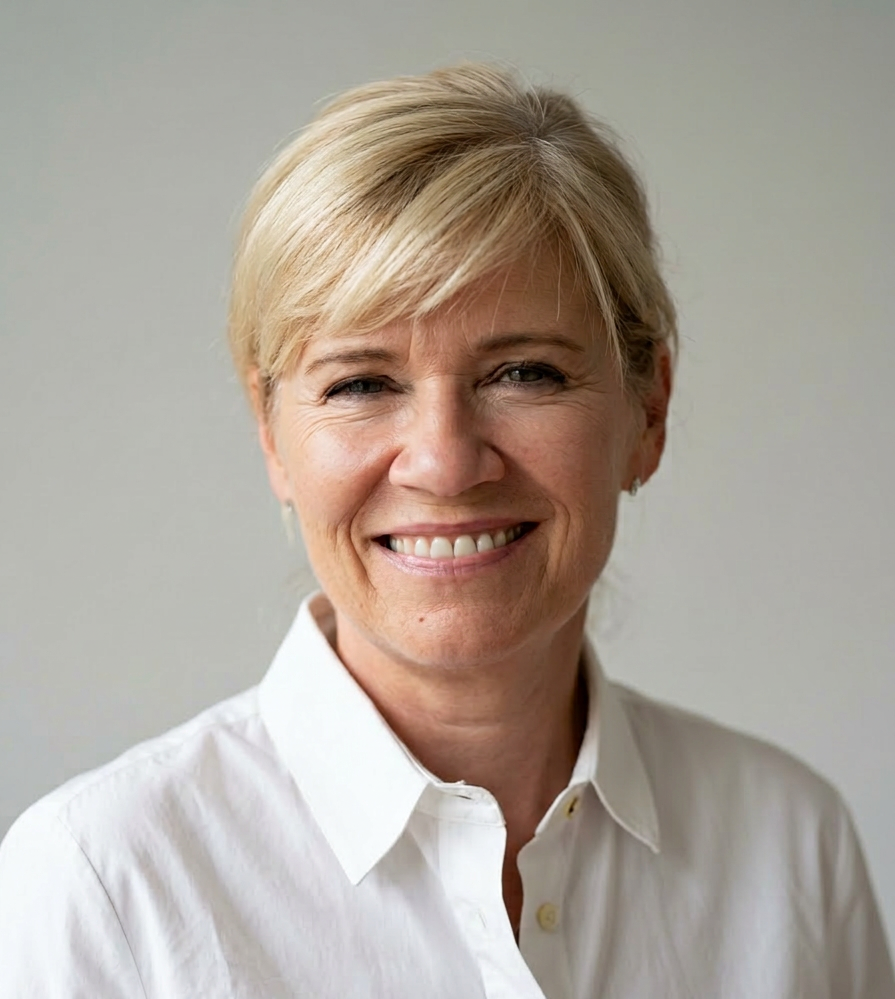
“The experience we refer to is how patients
perceive the results of treatment
at our clinic. We find sufficient indications that there is
a real hope for patients with Modic changes, including those with
complex conditions.”,
— Astrid Landewall, General Manager, The Modic Clinic
Please share your experiences with our treatment here.
Every experience can help someone who has recently received a Modic diagnosis.
Here, you can share your experience from treatment at Modic Clinic in Oslo in your own words. You can write as much or as little as you like. The most important thing is how your health situation has changed after treatment, but you can also describe how you experienced the contact with your clinician and the follow‑up you received.
Thank you for your help!
-
“I have become much better in my back after treatment at the Modic Clinic. I started the course in November 2020. The improvement has been gradual, but I now experience an almost pain‑free everyday life and can do activities I struggled with before the treatment.”
Anya 52
-
“Jeg kom til Modicklinikken i Oslo med svært dårlig bevegelsesfrihet. Jeg hadde god dialog med fysioterapeut, men først i samtale med Astrid Landwall følte jeg å bli forstått. Hun kunne også gi meg større forståelse av min lidelse. Min mann med meg, og han var glad for denne informasjonen, som gikk direkte på min problematikk. Jeg vaglgte å prøve ut behandlingen, selv om mange var skeptiske til så kraftig antibiotikakur. Legen min sa at hun nok hadde gjort det samme, men hun kunne ikke hjelpe meg med å gi ut medikamentet.
came to Modic Clinic in Oslo with very poor mobility. I had a good dialogue with my physical therapist, but it was only when I spoke with Astrid Landewall that I truly felt understood. She also gave me a much clearer understanding of my condition. My husband came with me, and he was grateful for information that spoke directly to my specific problems.
I chose to try the treatment, even though many were skeptical about such an intensive course of antibiotics. My GP said she would probably have done the same in my situation, but she could not prescribe the medication herself.
I received good help and support throughout the treatment and in the time afterwards. Today I have good mobility. I still have pain, but it is far more manageable. I do water‑based exercise three days a week to strengthen and keep my body in shape. I have done this for several years now, and I am certain it has helped me on the path toward a better life.” Laila, 65
-
“When I came to Modic Clinic I had severe pain every day. I struggled to get out of bed in the morning and had difficulty with many everyday activities, even on strong pain medication. My GP and my employer had started to talk about disability benefits, which was very hard to accept as a man in my early thirties.
I was advised to contact Modic Clinic, and I am very grateful that I did. Now, about 90% of my pain is gone and I’ve rediscovered the joy of being active. I am currently training to complete a full Ironman triathlon within the next year. Modic Clinic was my lifeline.” Robin, 35
-
“After a long period of back pain and hearing many positive experiences with antibiotic treatment, I decided to contact Modic Clinic. I had previously gone through two disc surgeries, but the daily pain still kept me from living the way I wanted. I had to limit both exercise and social life and constantly adjust to how I felt that day. If I did too much, I had to plan for being flat on my back afterwards.
From the moment I first sent my images to the clinic, I felt well taken care of. I received a very clear explanation of how the treatment works, which made me feel safe.
After just a few months of treatment, I caught myself doing things I hadn’t been able to do before. I slowly but surely kept getting better. Now, more than a year and a half after finishing treatment, I have no back pain. I can do what I want to do and have gotten properly back into training again.
Thank you for excellent treatment, follow‑up – and “a new life.”
Jeanette, 45
-
“ I had continuous back pain that caused major challenges in everyday life. I slept poorly because of the pain, struggled with getting dressed, had difficulty managing ordinary daily tasks, and needed pain medication every day.
The treatment itself was straightforward – no side effects, and a clear schedule showing which medications to take and when. About a year after completing the antibiotic course, my back felt so good that I no longer needed any pain medication.
Today, two years after treatment, I am completely free of back pain. I have a strong back and no limitations in daily life because of my back. It feels like an entirely new life.”
Hans Kristian, 43
-
“Hi! When my chiropractor told me I had Modic changes, I started doing a lot of research. Before he even told me the diagnosis (which I had never heard of), he said: “Now, don’t get depressed when you start reading about this…” That made it clear to me that getting better could be difficult.
I myself work as an alternative therapist, and my starting point is to avoid medication as much as possible. But sometimes it is even more important to “try everything” – at least the options that have documented effects.
I was training CrossFit at a fairly high level when I developed Modic changes. Going from that to not being able to move freely or lift a single weight made me decide to try antibiotic treatment at Modic Clinic, since it was the simplest and only option in Norway that did not involve surgery.
I gradually improved during the 3 months with minimal training and antibiotics. Toward the end I had a strong setback, but recovered again. I have been very careful with exercises and diet, as well as plant‑based products, supplements, healing, and so on.
It is now about three months since I finished the course, and I am back to functional fitness as before – and pain free.
Alice, 39
-
“After two back surgeries for disc herniation in 2007 and 2008, I still struggled with constant back pain. I had countless MRI scans, but they never showed new disc herniations serious enough to justify more surgery. Now, 17 years later, I happened to meet a physiotherapist in Søgne who had spent 10 years in Denmark working extensively with Modic patients.
He went through all the MRI scans I had taken over the years and said: “You have Modic type 2.” I had no idea what that meant, so I started reading and learning about it. The physiotherapist told me that a Modic clinic had just opened in Oslo and put me in touch with Astrid Landewall.
She sent me information to read, and I quickly realised this was something I had to try – it felt like my last chance to get help for my painful back. I bought the treatment course she recommended and followed it as closely as I possibly could.
Very few people in the healthcare system supported my decision at the time, but now, looking back, the doctors I talk to sound quite different. I am simply free of all back pain. I cannot understand why no one in the healthcare system suggested this earlier – the 100‑day course was all I needed to get well, after 17 years of wasted doctor’s appointments and MRI scans. I recommend the Modic Clinic in Oslo in the strongest possible terms.”
Trond
-
“I felt heard, seen and taken seriously. I got support when I needed it, encouraging feedback and positive reinforcement. I also learned a great deal about my back and Modic changes, and how everything is connected.”
Astri, 39
-
“I was received professionally by both physiotherapist and doctor in June 2023. I felt they were very thorough in assessing whether my pain was likely to improve with antibiotic treatment, and I was confident I could get in touch at any time if I had questions or side effects.
I followed all the recommendations closely regarding activity, lifting very little weight and letting my back rest, which immediately reduced my daytime pain. After about six weeks I noticed another change: the morning stiffness was no longer as painful. Over the following weeks, up to the end of the antibiotic course, this improvement continued and I could feel that my back tolerated more.
Around eight weeks in, for the first time in years I could bend forward without supporting myself with a hand on my knee. The improvements have continued, and it feels as if I have been given a new back – and quite simply a new life.
Now I have started more rehabilitation training and can tell that my back is muscularly stiff after having tensed just to stay upright for many years. I am still careful with some exercises and really appreciate having Astrid in the background as ongoing support and guidance.”
Tonje, 40:
-
Hi! After trying “everything” for my back problems over a long period, Modic changes were finally detected on an MRI in 2020/21. It turns out I had Modic changes several years earlier too, but at the time the doctors did not follow up or explain what it was. My GP only wanted to prescribe painkillers, but I searched online and got in touch with the Modic Clinic in the spring of 2021.
They received my images and recommended treatment from autumn 2021. I started antibiotic treatment in September 2021 without noticing any change at first. It took 8–10 months before I began to feel improvement in my back. Suddenly I could put on my socks in the morning and lie a little on my stomach when going to bed – things I had not been able to do before and the first signs that something was happening.
Gradually, the hours with pain became fewer, even though there were still days that were much worse than others. I would describe the changes like a share price: over time you see an upward trend. The curve points gently upward and you have to be patient. It has now been two years and my condition still varies, but it continues in the “right direction”. I do not believe my back would have improved without the Modic treatment, so I would recommend it.
In addition, I recommend the following: regular strength training once a week (for example CrossFit with moderate loads), a decompression belt about an hour a day, and stretching at most every other day. I find that stretching feels good for my back – but everything in moderation. Remember: be patient, and when a bad day comes, think of it as a marathon, not a sprint. Do not chase the pain, accept it, and do not let it ruin your mood. Personally, my goal is to become 100% pain free so I can fully return to playing golf. I am not quite there yet, but I hope to get there one day. Good luck!”
Christer, 44:
-
My pain escalated from 2017. There were sick leaves, various treatments, rehabilitation – and eventually I was completely broken down physically. I moved like a 90-year-old with rheumatism, had pain 24/7, and could barely sleep. My doctor had tried everything available. The conclusion from various clinicians was: tendinitis in the hips, two small disc herniations that “didn’t matter,” and normal age-related changes in the spine. The advice I was given: “Exercise it away – pain is not dangerous.”
I exercised. I went on long walks despite severe stiffness. I pushed myself – and only got worse.
Then, late in the fall of 2022, someone asked me: “Have you been checked for Modic changes?” I had never heard of it. I looked into it, sent my MRI images to Modic Clinic in Oslo, and received a response within a week: I had the type of Modic changes that could very likely be treated – and they came from the two disc herniations everyone had dismissed as insignificant.
Being met by Astrid and finally being taken seriously was indescribable. And to learn that the right treatment was the exact opposite of everything I had been told.
I started antibiotics on January 7, 2023. After 2 weeks I slept 2 consecutive hours for the first time in years. After 4 weeks my pain was significantly reduced. After 8 weeks almost all the pain was gone. On August 16, 2023 I was back at work. Today I exercise 2–3 times a week, my sleep is back on track, and the pain is virtually gone.
Modic Clinic saved my life – and that is not an exaggeration.
Elin, 53